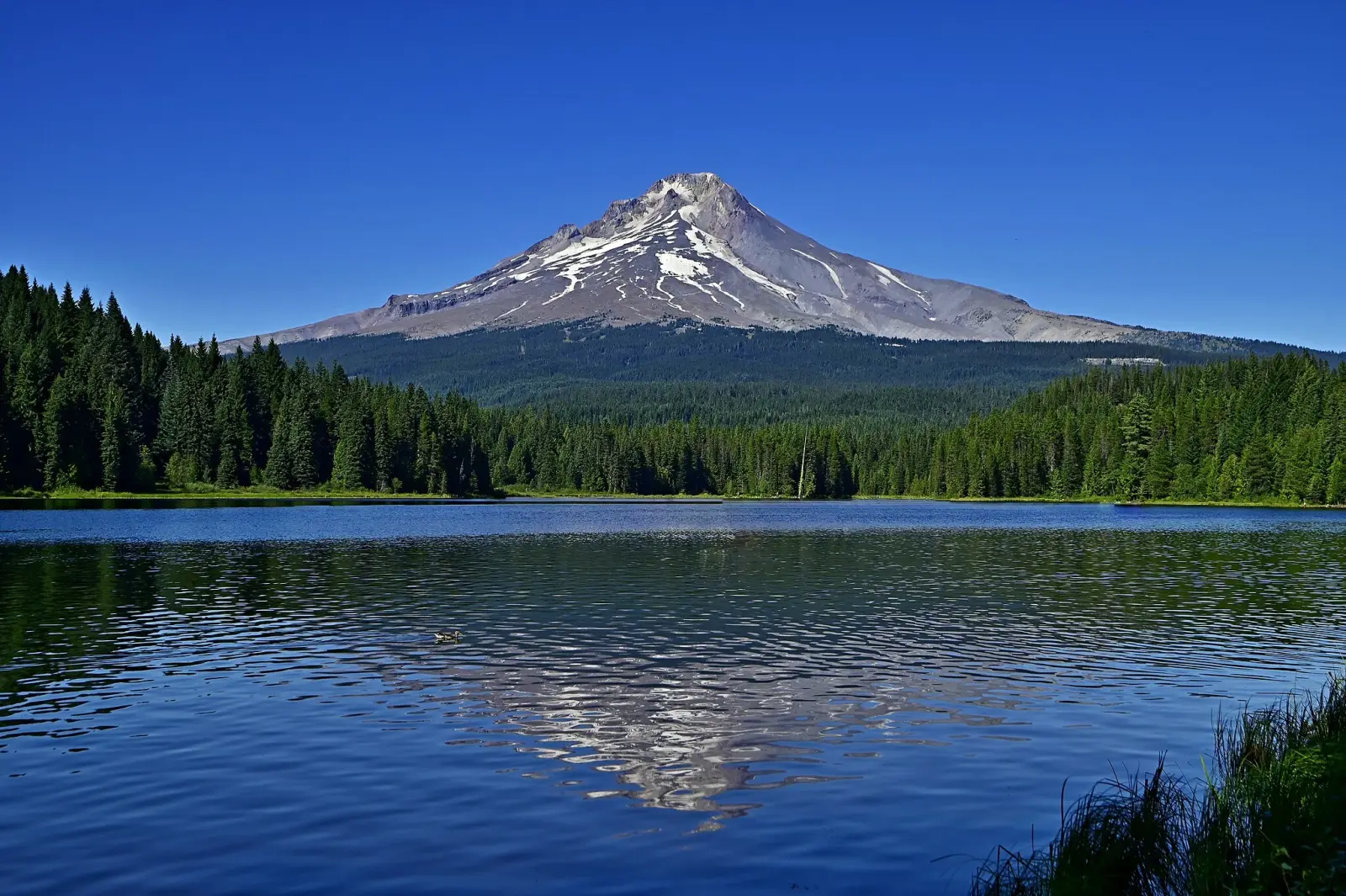
Mount Hood is the highest peak in Oregon and one of the most climbed mountains in the United States. Rising to 3429 m, it is a glaciated stratovolcano with a long history of recreation, skiing, and mountaineering. The mountain dominates the skyline east of Portland and is part of the Mount Hood National Forest.
Its slopes offer year-round outdoor opportunities, from forest hikes and alpine lake walks to technical summit attempts on snow and ice. The most popular climbing season is late spring through early summer, when snow conditions are usually more stable and access is easier. Weather can change quickly, and even short routes may become serious in poor visibility or warm conditions.
Mount Hood is known for its accessible approach, but the summit climb still requires glacier travel skills, route-finding, and proper equipment. Several established routes lead to the top, with varying levels of difficulty. The mountain also attracts skiers, snowboarders, and day hikers visiting the lower trails and scenic viewpoints around the volcano.
No users yet
No ascent logs yet. Be the first to log your climb!
The best-known hiking routes on Mount Hood are lower-elevation trails that circle the mountain or climb to viewpoints rather than the summit. The Timberline Trail is a classic 65 km loop around the volcano, crossing forests, rivers, and alpine meadows with constant views of glaciers and cliffs. Shorter options include the Paradise Park Trail and the Mirror Lake Trail, both popular for wildflowers, lake scenery, and day hikes. These routes are well suited to strong hikers seeking scenic mountain terrain without technical climbing.
The standard summit line is the South Side Route, also called the Old Chute or Pearly Gates depending on conditions. It is the most frequently climbed route and is considered the easiest technical ascent, but it still involves steep snow, glacier travel, and exposure to rockfall. The North Side Route is more remote and often more complex, with crevasses and longer glacier travel. Other routes, such as the Leuthold Couloir and Cooper Spur, are steeper and more serious, suited to experienced climbers only.
The main access point for summit attempts is the Timberline Lodge area on the south side of Mount Hood, about 90 km east of Portland. Most climbers approach via U.S. Route 26, then use the road to Timberline Lodge or nearby trailheads depending on the route. The approach to the climbing start is usually short, often beginning from the lodge parking area or from higher snow access points in season. Public transport is limited, so most visitors arrive by car or organized transfer.
Guided climbs are recommended for first-time summit attempts and for anyone without glacier travel experience. Well-known operators include Mountain Madness, International Alpine Guides, and Timberline Mountain Guides. Typical prices for a one-day guided summit climb range from about 300 to 700 USD per person, depending on group size, route, and gear rental. Private guiding is usually more expensive, often starting around 900 USD. Prices can change by season, so advance booking and direct confirmation are advised.
The best climbing window on Mount Hood is usually from late April through early July, when snow coverage is still good and the main routes are more predictable. Early morning starts are standard because snow softens quickly later in the day, increasing the risk of rockfall and slippage. Winter ascents are possible but much more demanding, with colder temperatures, stronger winds, and greater avalanche danger. Summer hiking on the lower trails is best from July to September, when access roads and forest paths are generally clear.
For a summit climb, essential gear includes crampons, an ice axe, helmet, harness, rope, and glacier travel equipment such as crevasse rescue tools. Warm layered clothing, waterproof outerwear, gloves, goggles, and sturdy mountaineering boots are important because conditions can shift from sun to storm quickly. Trekking poles are useful on approach trails, while sunscreen and sunglasses are necessary due to strong snow reflection. For lower hiking routes, standard mountain day-hiking gear is usually enough, but weather protection remains important.
The forests and alpine zones around Mount Hood support black bears, deer, elk, coyotes, and smaller mammals such as marmots and squirrels. Birdlife includes hawks, woodpeckers, owls, and seasonal songbirds in the lower forests. Near streams and wet meadows, visitors may also see amphibians and a variety of insects in summer. Wildlife is most active at dawn and dusk, and food should be stored carefully. On higher slopes, animal life becomes sparse because of snow, wind, and exposed volcanic terrain.
Check weather, avalanche forecasts, and route conditions before setting out, especially for summit climbs. Start early, carry enough water, and plan for rapid temperature changes even in summer. Parking can be busy on weekends and holidays, so arriving before sunrise is often helpful. Cell service is unreliable on many slopes, and internet access is limited outside developed areas such as Timberline Lodge. If you are not experienced with snow travel, hire a guide or choose a lower trail. Permits and seasonal rules may apply, so verify current regulations in advance.
Mount Hood is a dormant stratovolcano and the highest point in Oregon. It has 12 named glaciers, making it one of the most heavily glaciated peaks in the Cascade Range. The mountain is visible from much of the Portland area and has long been a symbol of the region. Timberline Lodge, built in the 1930s, is a historic landmark and a popular base for visitors. The mountain also has a strong ski culture, with one of the longest ski seasons in North America.
How long does it take to climb Mount Hood? A standard summit climb usually takes 8 to 12 hours round trip, depending on route, weather, and fitness.
How long does it take to approach Mount Hood? The approach to the main climbing start is often 15 to 45 minutes from Timberline Lodge, though some routes require longer access.
Is there cell service and internet on the Mount Hood? Coverage is inconsistent. Service may work near developed areas, but it is unreliable on most slopes and on summit routes.
How difficult is it to climb Mount Hood? The climb is moderate to difficult. It is not a simple hike and requires snow travel, route-finding, and glacier safety skills.
Can beginners hike Mount Hood? Beginners can hike lower trails, but the summit climb is not recommended without experience or a guide.
How many people climb Mount Hood? Thousands of people attempt the mountain each year, especially on the popular south side route in spring and early summer.
No posts yet.