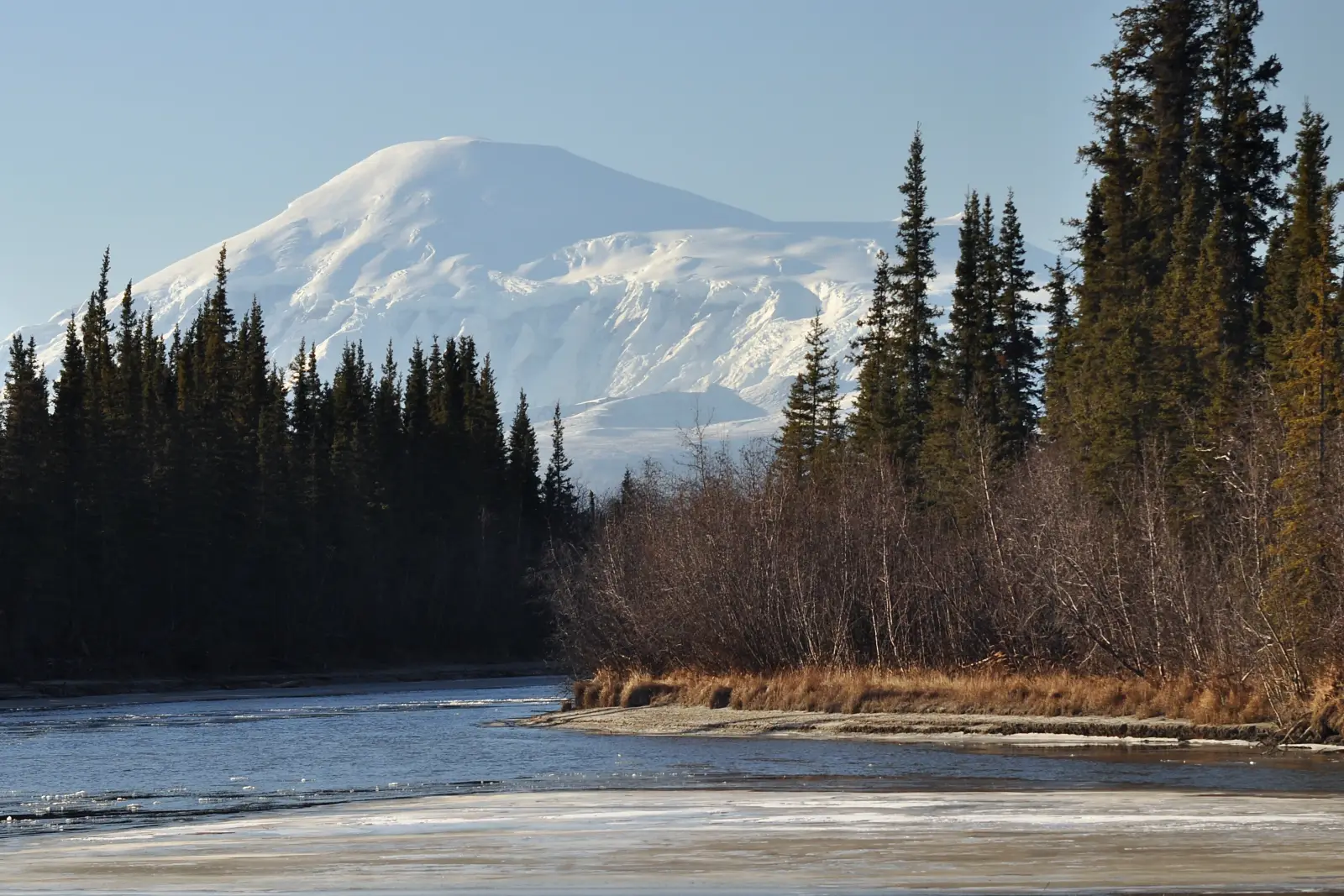
Mount Sanford is a remote 4,949 m volcano in eastern Alaska, rising above the icefields of Wrangell–St. Elias National Park and Preserve. It is one of the highest peaks in the United States and is known for its huge glaciated flanks, long approaches, and serious alpine conditions. The mountain is not a trekking destination in the usual sense; most visitors come for expedition-style climbing, ski mountaineering, or aerial viewing.
Because of its isolation, access is complex and weather-dependent. Climbers typically fly in by bush plane, then travel across glaciers to establish a base camp. The standard ascent is a non-technical glacier climb in good conditions, but crevasses, storms, whiteouts, and avalanche exposure make it a demanding objective. Mount Sanford rewards experienced mountaineers with a true wilderness experience and wide views across the Wrangell Mountains.
No users yet
No routes yet.
No ascent logs yet. Be the first to log your climb!
There are no marked trekking routes on Mount Sanford itself, and the mountain is not suited to casual hiking. The closest thing to trekking is a glacier approach from a remote landing area, usually combined with ski travel or sled hauling. These journeys are long, cold, and self-supported, with no trails, shelters, or services. Most parties use the approach to reach a base camp rather than to “trek” for sightseeing.
Visitors looking for easier walking usually explore the broader Wrangell–St. Elias area instead, where valley routes and historic sites offer day-hike options. On Mount Sanford, the terrain is dominated by ice, moraine, and crevassed glacier surfaces, so route-finding and glacier travel skills are essential. In practical terms, trekking here means expedition travel, not recreational hiking.
The most commonly attempted line on Mount Sanford is the broad glacier route on the mountain’s lower and upper icefields. It is generally considered the standard ascent because it avoids steep technical rock and ice, but it still requires strong glacier travel skills, rope work, and careful navigation through crevasses. Conditions can change quickly, and summit success depends heavily on weather and snow stability.
More advanced parties may explore alternative lines on the mountain’s flanks, but these are less common and can involve steeper snow, mixed terrain, or greater avalanche exposure. The mountain’s size and remoteness mean that even a “standard” route feels serious. Most climbers plan for a multi-day expedition with a high camp, crevasse rescue gear, and enough flexibility to wait out storms.
The usual access point for Mount Sanford is the remote Wrangell–St. Elias National Park and Preserve backcountry, with the nearest practical hub being Gulkana or Glennallen. Most expeditions begin with a charter flight from a regional airstrip to a glacier landing zone near the mountain. There is no road to the mountain, and the final approach is by air and foot travel only.
To get there, travelers usually drive the Richardson Highway or Tok Cut-Off to reach staging communities, then arrange a bush-plane flight with an operator experienced in glacier landings. From the landing area, teams travel across ice and snow to base camp. Because weather can ground aircraft for days, extra time and supplies are essential.
Guided ascents of Mount Sanford are uncommon, and many reputable Alaska mountain services focus on logistics rather than full-service guiding for this peak. Well-known operators in the region include Alaska Alpine Adventures, Alaska Mountaineering School, and Ultima Thule Outfitters. They may help with expedition planning, glacier travel support, or charter coordination, depending on season and staffing.
Typical costs vary widely because the mountain requires aircraft access, specialized gear, and extra weather days. As a rough planning range, logistics-only support can start around USD 1,500–3,500 per person for limited services, while a fully supported expedition may cost USD 5,000–12,000+ per person, excluding international travel and personal equipment. Always confirm current prices directly with operators.
The best climbing window for Mount Sanford is usually late spring through early summer, roughly April to June. During this period, snow conditions are often more stable, daylight is long, and glacier travel is generally safer than in the darker, stormier months. Many climbers also prefer this season for ski descents, when the mountain’s broad snowfields can offer efficient travel.
Later in summer, crevasses open more widely and snow bridges weaken, increasing objective hazards. Winter ascents are possible for highly experienced teams but are much more committing because of extreme cold, short daylight, and difficult access. In all seasons, weather in Alaska can shift quickly, so flexible scheduling is important.
Climbing Mount Sanford requires full glacier-expedition equipment. Essential items include crampons, ice axe, harness, helmet, rope, crevasse rescue gear, avalanche transceiver, probe, and shovel. Because the route is remote, teams should also carry navigation tools, satellite communication, emergency shelter, and a reliable stove for melting snow. Ski mountaineering gear is common for the approach and descent.
Clothing should be suitable for severe cold and wind, with layered insulation, waterproof outerwear, goggles, and warm gloves. High-altitude boots, sun protection, and spare socks are important for long days on snow. Since there are no services on the mountain, every team must be self-sufficient and prepared for delays caused by weather or aircraft scheduling.
The broader Wrangell–St. Elias region supports classic Alaska wildlife, though animals are usually seen in valleys rather than on the high glacier slopes of Mount Sanford. Common species include moose, Dall sheep, caribou, wolves, foxes, and bears. Golden eagles and other raptors may be seen soaring over ridges and open terrain during the warmer months.
On the mountain itself, life is sparse because of the ice and altitude. Climbers should still follow bear-safe food storage practices at lower camps and remain alert when moving through brushy or river-access areas. Wildlife viewing is a bonus of the region, but the main focus on Mount Sanford is always safe travel in a harsh alpine environment.
Plan extra days for weather delays, because flights to and from Mount Sanford are often the biggest variable in any expedition. Bring more food and fuel than you think you need, and make sure your group has experience with glacier navigation and crevasse rescue. A satellite messenger or phone is strongly recommended, since there is no reliable communication on the mountain.
Travelers should also check park regulations, flight permissions, and insurance coverage before departure. If you are not an experienced mountaineer, consider hiring a qualified guide for the logistics and safety planning. Respect the remoteness of the area: rescue response can be slow, and self-reliance is essential. Good physical conditioning and conservative decision-making are key to a safe trip.
Mount Sanford is a massive shield volcano and one of the tallest volcanoes in the United States. Its broad profile makes it look less dramatic than sharp alpine peaks, but its scale is enormous. The mountain is part of the volcanic arc of the Wrangell Mountains, and its ice-covered slopes create a striking contrast between fire-born geology and glacial terrain.
The peak is so remote that many visitors see it only from the air. Despite its height, it is climbed far less often than more accessible mountains in Alaska. That isolation is part of its appeal: Mount Sanford offers a true wilderness objective with very few crowds and a strong sense of expedition adventure.
How long does it take to climb Mount Sanford? Most expeditions take about 7 to 14 days, depending on weather, route conditions, and acclimatization.
How long does it take to approach Mount Sanford? The approach usually takes 1 to 3 days after the glacier landing, but flight delays can add extra time.
Is there cell service and internet on the Mount Sanford? No reliable cell service or internet is available on the mountain; satellite communication is the standard option.
How difficult is it to climb Mount Sanford? It is a serious alpine objective with glacier hazards, remote access, and harsh weather, suitable for experienced mountaineers.
Can beginners hike Mount Sanford? No. It is not a beginner hike and should not be attempted without glacier travel and expedition experience.
How many people climb Mount Sanford? Only a small number each year, since the mountain is remote and access is difficult.
No posts yet.

.jpg)