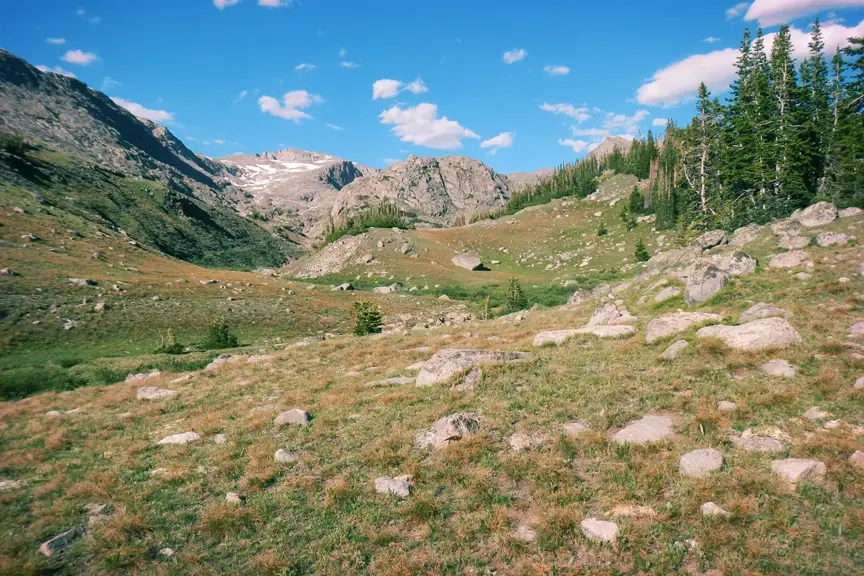
Cloud Peak rises to 4015 m in the United States and is the highest summit of the Bighorn Mountains in Wyoming. The mountain is known for its alpine setting, broad ridges, and remote backcountry character rather than crowded trail access. Most visitors come for long day hikes, backpacking, and classic summit climbs that combine forest, lakes, and high tundra.
The peak sits inside the Cloud Peak Wilderness, where weather can change quickly and navigation matters. Routes are generally non-technical in dry summer conditions, but the final slopes can feel strenuous because of elevation, loose rock, and long approaches. The area appeals to hikers seeking solitude, scenic basins, and a true mountain experience.
Access is seasonal and services are limited, so planning is important. Climbers usually start from trailheads on the western side of the range and spend one or more days reaching the summit. The best visits are typically in summer and early fall, when snow has mostly melted and high-country trails are more reliable.
No users yet
No routes yet.
No ascent logs yet. Be the first to log your climb!
The most popular trekking option is the approach from West Tensleep Trailhead through the scenic basin below Cloud Peak. This route is long, steady, and well suited to strong hikers who want a backpacking-style ascent with lake views and open alpine terrain. Another common choice is the trail network around Paint Rock Creek, which offers quieter travel, forested sections, and access to high basins. These treks are valued for scenery more than speed, and most hikers plan an overnight stay to reduce the effort of the summit day.
The standard summit route is the easiest and most frequently used line, usually following non-technical slopes and ridges from the upper basin. In summer, it is a strenuous hike with some loose rock and route-finding near the top. More direct ridge variations exist for experienced climbers, but they are less common and can involve exposed scrambling. In early season, snowfields may add difficulty and require ice axe and crampons. Overall, Cloud Peak is considered a serious high-altitude objective because of distance, elevation gain, and changing mountain conditions.
The nearest gateway town is Buffalo, Wyoming, with additional access from Sheridan. Most climbers drive to trailheads on forest roads west of the summit, especially the West Tensleep Trailhead. From Buffalo, the approach typically takes about 1.5 to 2.5 hours by car depending on road conditions. A high-clearance vehicle is helpful on some access roads, and in wet weather the final miles can be rough. From the trailhead, the route usually requires a long hike into the wilderness before the summit attempt.
Guided trips to Cloud Peak are less common than in major alpine destinations, so many visitors organize their own climbs. In nearby Wyoming, reputable outdoor outfitters and guide services in Buffalo, Sheridan, and Casper may arrange custom backpacking or mountaineering support. Typical private guiding prices in the region often start around $350 to $600 per day for one guide, with multi-day trips costing more depending on group size, gear, and logistics. It is best to confirm current rates directly with licensed local operators before booking.
The best time to climb Cloud Peak is usually from mid-July through September. During this period, snow cover is lower, trail access is more reliable, and daylight is long enough for a full summit day. August often offers the most stable conditions, though afternoon thunderstorms can still develop quickly. Early summer may bring lingering snow in shaded basins, while late fall can introduce cold temperatures and early storms. Because the mountain is high and exposed, climbers should always check local weather before starting.
For a summer ascent, hikers should carry sturdy boots, layered clothing, rain protection, navigation tools, food, and enough water treatment for a long day or overnight trip. Trekking poles are useful on steep descents and loose sections. In early season or after storms, add an ice axe, crampons, and the skills to use them. A headlamp, map, compass, and emergency insulation are important because the route is remote and cell coverage is unreliable. Backpackers should also bring a tent, sleeping bag, and bear-safe food storage.
The wilderness around Cloud Peak supports elk, mule deer, black bears, moose, mountain goats in some higher areas, and smaller animals such as marmots and pikas. Birdlife includes raptors and alpine species that use the open ridges and lakes. Visitors should store food carefully, keep a respectful distance from wildlife, and avoid surprising animals in brushy drainages. Bear awareness is especially important on overnight trips. The area is valued for its intact habitat, so staying on established trails helps protect both wildlife and fragile alpine vegetation.
Plan for a long day even if the summit looks close on the map, because the approach is remote and elevation gain is significant. Start early to avoid afternoon storms and to leave enough time for the descent. Carry extra layers, since wind and temperature can change quickly above treeline. Water sources may be available in basins, but treatment is recommended. Tell someone your route and expected return time. If you are not comfortable with navigation, consider hiring a local guide or joining an experienced party, especially for a first visit to the range.
Cloud Peak is the highest point in the Bighorn Mountains and one of the most prominent high summits in northern Wyoming. Despite its height, it is not a heavily developed mountain, which gives it a quiet, backcountry feel. The peak is part of a protected wilderness area, so the experience is closer to a remote alpine expedition than a roadside climb. On clear days, the summit offers wide views across the surrounding range, high basins, and distant plains.
How long does it take to climb Cloud Peak? Most climbers need 8 to 14 hours for a round trip summit day, and some choose to split the effort into a two-day backpacking trip.
How long does it take to approach Cloud Peak? The approach from the trailhead to the upper basin usually takes 4 to 8 hours on foot, depending on route, pace, and pack weight.
Is there cell service and internet on the Cloud Peak? Cell service is generally unreliable or absent in the wilderness, and internet access should not be expected.
How difficult is it to climb Cloud Peak? It is a strenuous high-altitude climb with a long approach, route-finding, and possible loose rock or snow, but the standard route is usually non-technical in summer.
Can beginners hike Cloud Peak? Strong beginners with good fitness can attempt the lower trails, but a summit climb is better suited to hikers with mountain experience or a guide.
How many people climb Cloud Peak? It is a relatively quiet mountain, so visitor numbers are modest compared with famous peaks; exact annual totals are not commonly published.
No posts yet.